10 Fairy Tales From Around The World You Need to Read
Tales from around the world offer a glimpse into the diverse cultures that shaped them.
Fairy tales have a way of transcending time and place. We grow up hearing stories that captivate our imaginations, but beyond the well-known ones, there are so many treasures waiting to be discovered from all corners of the world. From enchanting princesses and clever animals to magical objects and life-changing quests, these stories highlight universal themes, while also offering unique cultural twists.
Exploring fairy tales from different countries gives us a chance to see how diverse cultures view courage, love, and even mischief. Whether it’s a tale of sibling loyalty from Germany or a love story intertwined with fate from China, these fairy tales offer something new yet familiar, sparking that timeless sense of wonder. So, if you’re looking to expand your fairy tale repertoire, here are 10 stories from around the world that you need to read!
10. The Cobra Norato
Origin: Brazil
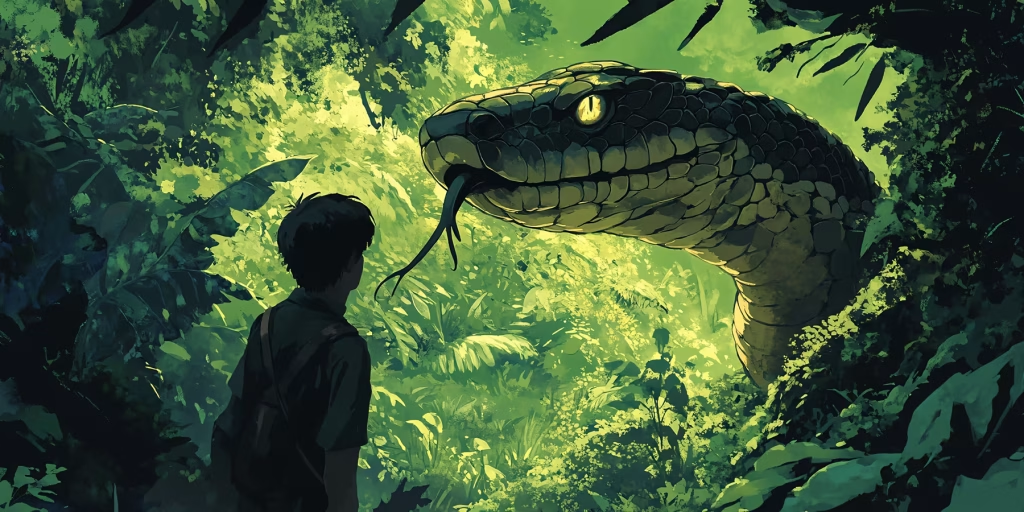
The Cobra Norato is one of Brazil’s most famous folktales, originating from the Amazon region. The story follows a young man named Norato, who transforms into a giant snake (Cobra) and travels through the Amazon in search of his mother, also cursed to be a snake. Norato seeks a way to break the curse, embarking on a journey filled with challenges, encounters with supernatural beings, and mysterious forests. This tale reflects the deep connection between Brazilian folklore and the Amazon’s mystical landscape.
The story of Cobra Norato is rich in Amazonian mythology, exploring themes of transformation, loyalty, and the relationship between humans and nature. The snake is often seen as a powerful symbol in the Amazon, and this story highlights both the beauty and dangers of the rainforest. This fairy tale offers insight into the rich cultural heritage of Brazil’s indigenous folklore.
9. Pan Twardowski
Origin: Poland
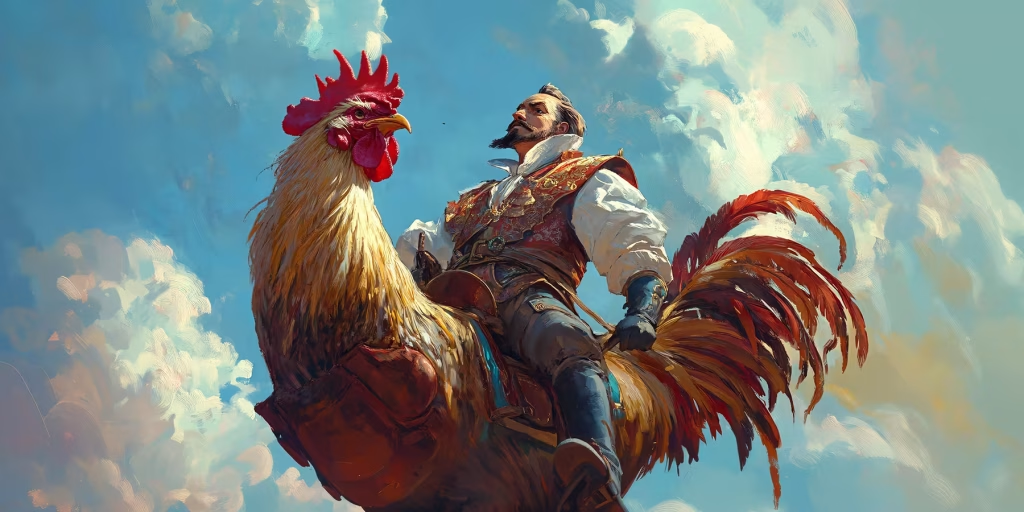
In Pan Twardowski, a nobleman makes a pact with the devil in exchange for magical powers. Pan Twardowski becomes a powerful sorcerer and uses his abilities to perform miraculous feats. However, when the devil comes to collect his soul, Twardowski cleverly avoids his fate for a long time by staying away from places where the devil can take him. The tale ends when the devil finally tricks him into entering a specific location, but instead of taking him to hell, he traps Twardowski on the moon, where he is said to still live.
This story reflects elements of Polish folklore, including wit, bravery, and the consequences of dealing with dark forces. It also touches on themes of trickery and cleverness, which are common in many European folktales.
One of most famous film adaptation of Pan Twardowski is Twardowski (2015), part of the Legendy Polskie (Polish Legends) series produced by Allegro. This modern sci-fi reimagining of the classic legend became a viral hit in Poland. Set in the future, it portrays Pan Twardowski as a spacefaring adventurer who tries to outwit the devil after making a pact with him. The film’s sleek visual effects and contemporary storytelling brought the legendary figure back into popular culture, making it widely known to modern audiences.
8. Vasilisa the Beautiful
Origin: Russia
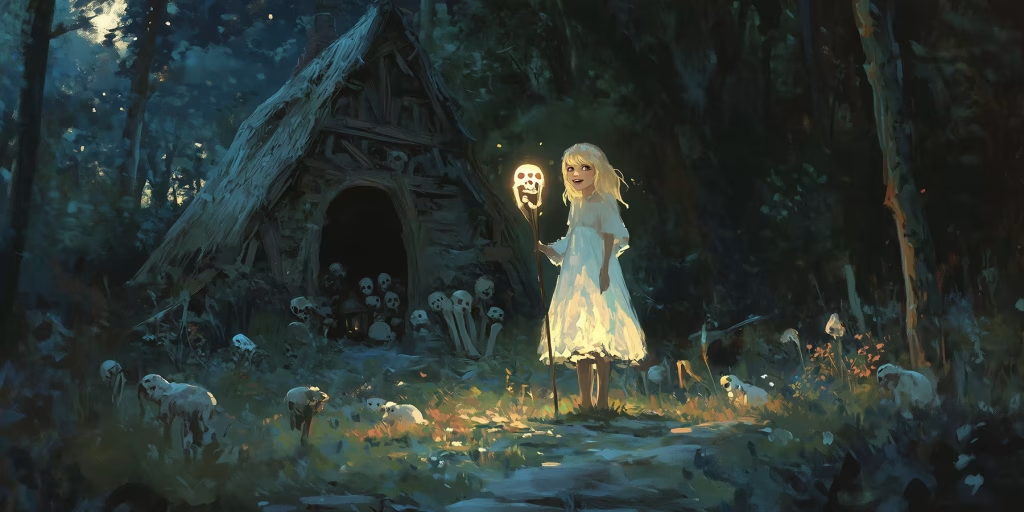
Vasilisa the Beautiful is a classic Russian fairy tale that follows the journey of a young girl named Vasilisa. After her mother passes away, Vasilisa is left in the care of her cruel stepmother and stepsisters. Before her death, Vasilisa’s mother gives her a magical doll that helps and protects her in times of need. When Vasilisa is sent on a dangerous errand to fetch fire from the fearsome witch Baba Yaga, her wit and kindness, along with the doll’s magic, guide her through the witch’s treacherous tests. This story emphasizes the themes of perseverance, kindness, and inner strength.
The tale is steeped in Russian folklore, with Baba Yaga as a prominent figure in Slavic mythology. The magical doll represents maternal protection, while Vasilisa’s journey reflects the transformation from girlhood to womanhood. With its focus on bravery, resourcefulness, and magic, Vasilisa the Beautiful is a beloved and culturally significant fairy tale that continues to inspire adaptations in literature and the arts.
One of the most notable adaptations is the 1939 Soviet film Vasilisa the Beautiful (Василиса Прекрасная), directed by Alexander Rou. This film is a live-action adaptation of the famous Russian fairy tale and is well-regarded for its portrayal of the classic elements of the story, including the magical doll and the encounter with Baba Yaga.
7. The Tiger and the Brahmin
Origin: India
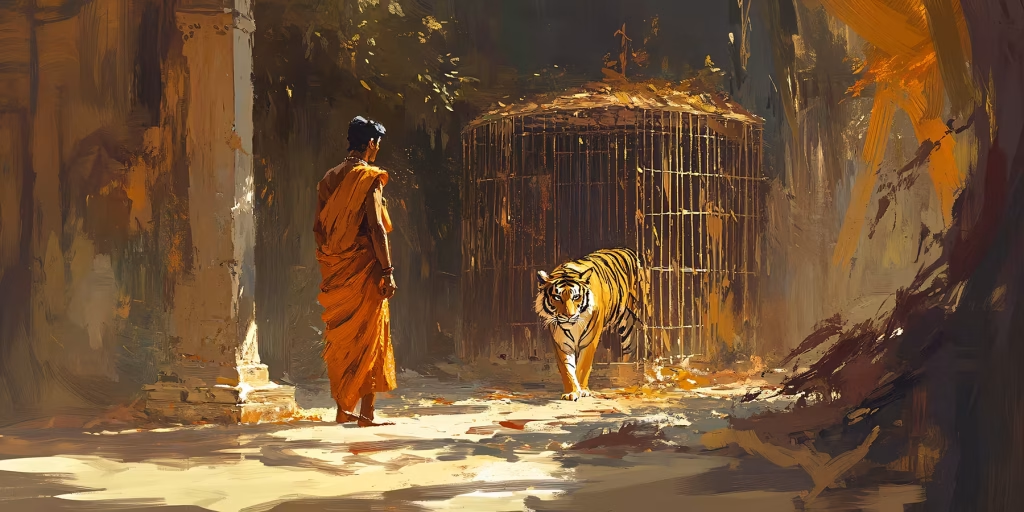
In The Tiger and the Brahmin, a compassionate Brahmin frees a tiger trapped in a cage, only to have the tiger turn on him and threaten to devour him. Terrified, the Brahmin seeks advice from various creatures and objects, all of whom express the futility of expecting gratitude in an unfair world. However, the Brahmin cleverly tricks the tiger back into the cage with the help of a passing jackal, saving his life.
This Indian tale highlights the complexities of moral judgment, kindness, and cunning. The Brahmin’s willingness to help the tiger, despite the risks, reflects the Indian belief in compassion and karma, but it also acknowledges the harsh realities of life, where good deeds are not always rewarded. The trickster character of the jackal represents the wit and wisdom that are often revered in Indian folklore.
Although not widely adapted as a standalone film, this story and similar Indian folktales appear in animated series like Stories from Panchatantra (based on ancient Indian fables), which covers themes of morality and wit.
6. Anansi the Spider
Origin: Ghana
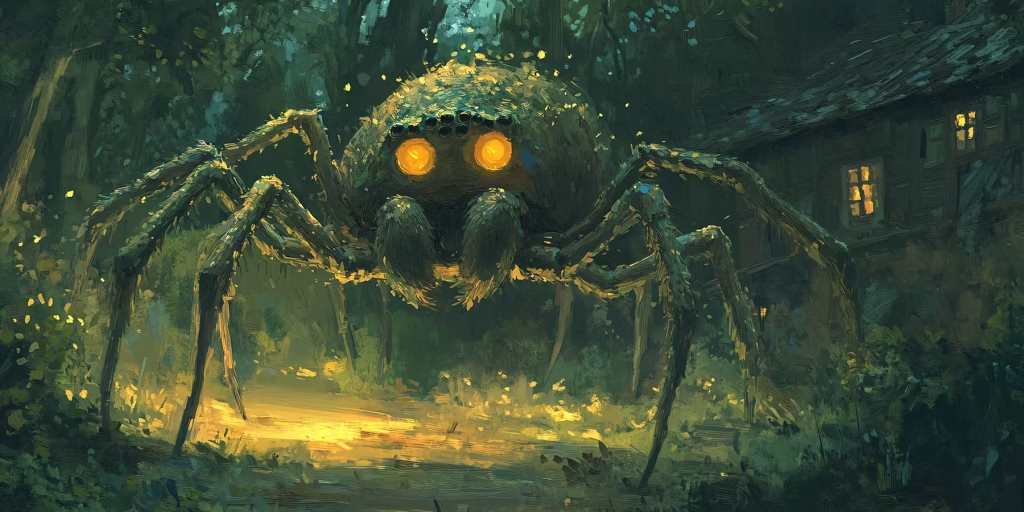
Anansi the Spider is a central figure in West African folklore, particularly in Ghana, where his cleverness and trickery are legendary. Known as the “trickster god,” Anansi uses his wit and cunning to outsmart bigger and stronger foes, often solving problems or acquiring things that seem out of reach. One of his most famous stories involves his quest to bring the world’s stories from the sky god, Nyame, which he successfully does by using his intelligence to complete a series of impossible tasks.
Anansi’s tales not only entertain but also impart moral lessons, such as the value of cleverness over brute strength and the consequences of greed. His stories have crossed the Atlantic with the African diaspora and continue to be told in Caribbean cultures, where Anansi remains a beloved character. Anansi’s themes of resilience and adaptability have made him an enduring figure in folklore and literature across many cultures.
Anansi has appeared in several film and television adaptations, with one of the most notable being in the 1969 animated short film Anansi the Spider, directed by Gerald McDermott. The film is based on McDermott’s retelling of Anansi stories and won critical acclaim, even earning an Academy Award nomination for Best Animated Short.
5. The Legend of Malin Kundang

Origin: Indonesia
The Legend of Malin Kundang is a poignant tale from Indonesia that tells the story of a young man who becomes successful but forgets his humble origins. Malin Kundang grows up in a poor fishing village with his loving mother. He dreams of a better life and sets sail to seek fortune. With hard work and determination, he eventually becomes wealthy and marries a beautiful woman.
However, as Malin Kundang gains wealth and status, he forgets about his mother and his past. When he returns to his village, his mother is overjoyed to see him, but Malin Kundang, ashamed of his roots, denies her and refuses to acknowledge her as his mother. Heartbroken, she curses him, and as a result, Malin Kundang is transformed into stone. The tale serves as a reminder of the importance of family, humility, and respect for one’s origins. It reflects the cultural values of honoring one’s parents and the consequences of forgetting one’s roots in Indonesian society.
The Legend of Malin Kundang has been adapted into several films and television productions in Indonesia. One notable adaptation is the film Malin Kundang (1971), which retells the story with a blend of drama and fantasy elements. It captures the essence of the original tale while showcasing the cultural and moral lessons embedded in it. Various local theater productions and television series have also depicted this famous legend, highlighting its enduring popularity and significance in Indonesian folklore.
4. The Fisherman and the Jinni

Origin: Middle East
In The Fisherman and the Jinni, a poor fisherman casts his net into the sea and pulls up an ancient bottle. When he opens it, a powerful jinni emerges, threatening to kill the fisherman. Using his wits, the fisherman tricks the jinni back into the bottle, saving himself from certain doom. The tale is a part of the larger collection of stories known as One Thousand and One Nights, reflecting the rich storytelling tradition of the Middle East.
This tale underscores themes of cleverness, survival, and the dangerous nature of unchecked power. It highlights the importance of wisdom over brute strength, a recurring theme in Middle Eastern folklore. The story also reflects the region’s fascination with magic, fate, and the idea that intelligence can triumph over seemingly impossible odds.
The Fisherman and the Jinni appears in various adaptations of One Thousand and One Nights (Arabian Nights), including the famous 1940s Hollywood film The Thief of Bagdad and animated versions. The general motif of the fisherman releasing a magical creature has been used in many films inspired by Arabian Nights.
3. The Twelve Dancing Princesses
Origin: Germany
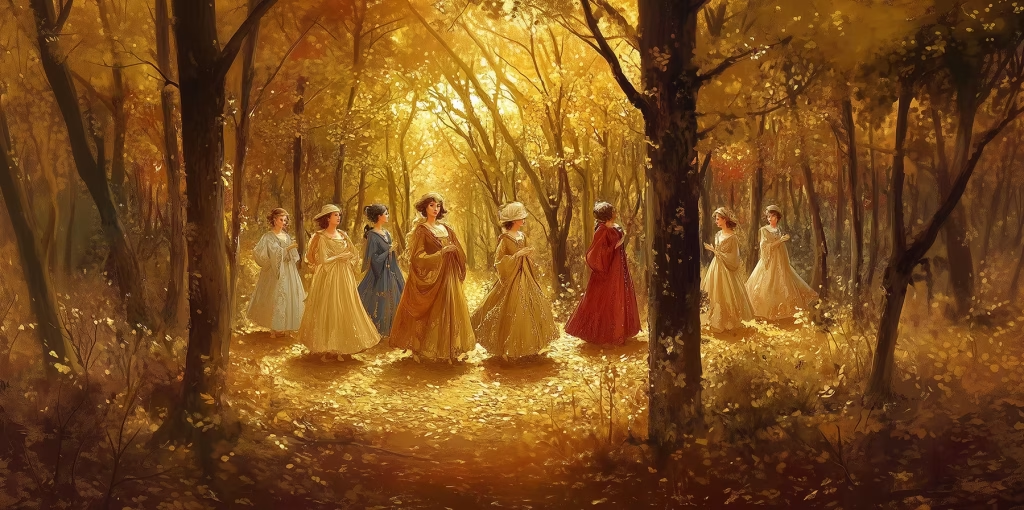
The Twelve Dancing Princesses presents a mystery at the heart of royal life: twelve princesses mysteriously wear out their shoes each night, but no one knows where they go. Their father, the king, becomes desperate to uncover the secret, offering a rich reward for anyone who can solve the mystery. A brave and clever soldier takes up the challenge, following the princesses through a hidden portal to a magical realm where they dance the night away with twelve charming princes. With determination and some magical assistance, the soldier reveals their secret, ultimately marrying one of the princesses as his reward.
This tale stands out for its themes of adventure, discovery, and the bond between the princesses. Unlike some stories that punish disobedience, The Twelve Dancing Princesses focuses on curiosity and the allure of mystery, showing how the princesses’ desire for freedom leads them to a world of enchantment. The magical setting of the underground kingdom brings out the Germanic love for forests, mystery, and folklore.
This fairy tale has been adapted several times. One popular version is Barbie in The 12 Dancing Princesses (2006), an animated movie that brings a whimsical retelling of the classic tale. Additionally, it’s appeared in various fairy tale anthology films.
2. The White Snake

Origin: China
The White Snake tells the story of a young scholar who unknowingly marries a beautiful woman who is actually a white snake spirit in disguise. Their love is tested when a monk, believing their relationship is unnatural, attempts to separate them. Despite the trials they face, the scholar remains loyal to his wife, fighting to be reunited with her. In the end, love transcends the boundaries between the human and spiritual worlds.
This Chinese tale highlights themes of loyalty, devotion, and the intersection between the supernatural and human realms. It reflects the importance of familial duty and the belief in fate and reincarnation prevalent in Chinese culture. The tension between tradition and emotion is central to the story, emphasizing that true love can overcome even the most challenging obstacles.
The Legend of the White Snake has numerous film and television adaptations in China. Recent versions include White Snake (2019), a Chinese animated film, and The Sorcerer and the White Snake (2011), starring Jet Li. The story is a beloved Chinese legend often adapted for the screen.
1. The Tale of the Bamboo Cutter

Origin: Japan
The Tale of the Bamboo Cutter is one of Japan’s oldest and most beloved fairy tales. It tells the story of Kaguya-hime, a tiny girl found inside a glowing bamboo stalk by an elderly bamboo cutter. She grows into an ethereal beauty, attracting noble suitors and even the emperor himself. Despite their affection, Kaguya remains distant, as her true identity is revealed; she is from the Moon, and must eventually return to her celestial home. This tale concludes with a bittersweet departure, leaving both her family and admirers heartbroken.
This Japanese tale encapsulates themes of love, loss, and the fleeting nature of beauty and life. Its celestial connections reflect the importance of nature and the spiritual world in Japanese culture. The story highlights the concept of impermanence, a key element in Japanese philosophy, where even the most beautiful moments are transitory.
One of the most famous adaptations is The Tale of the Princess Kaguya (2013), an animated film by Studio Ghibli. The film beautifully captures the magical elements of the original story.